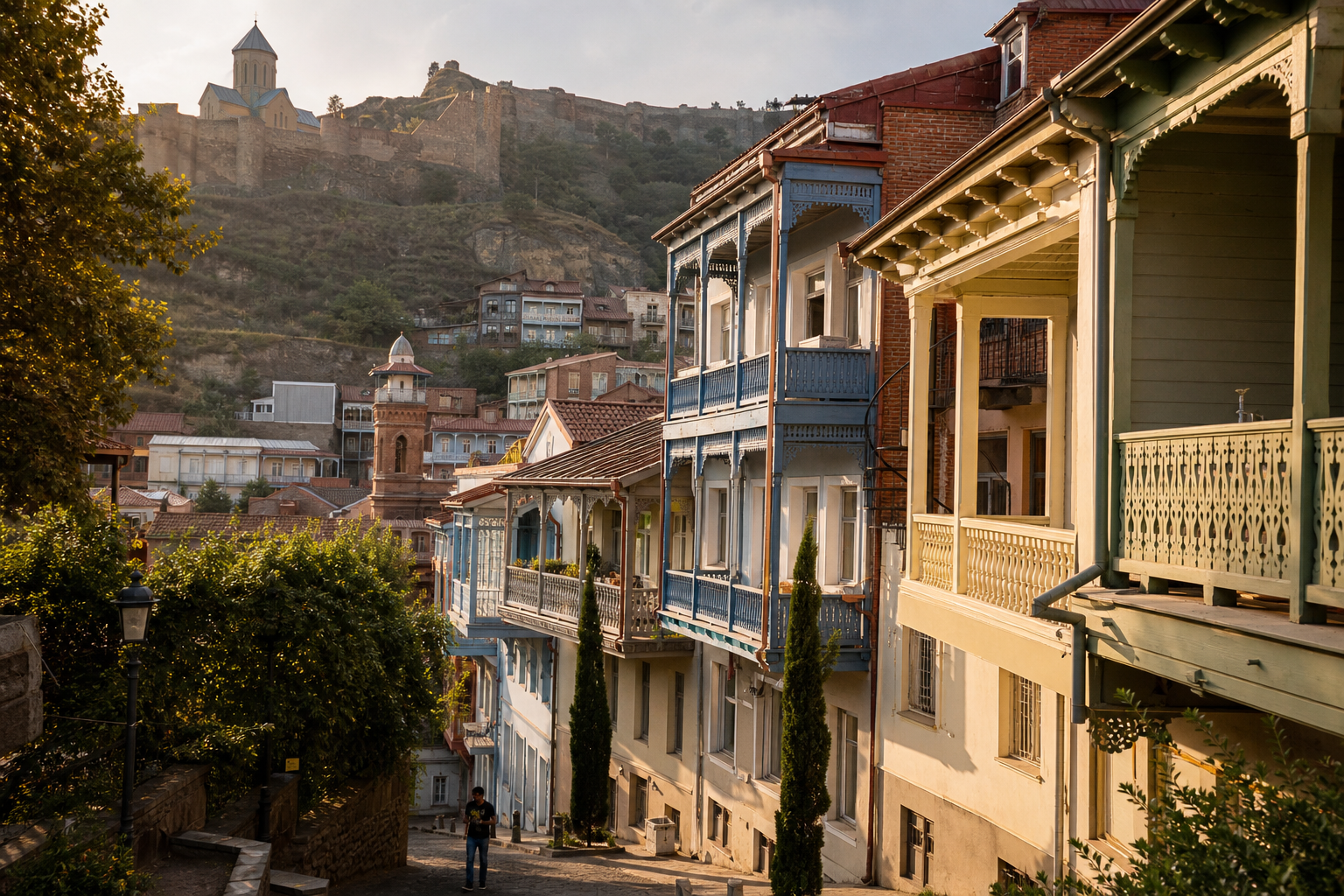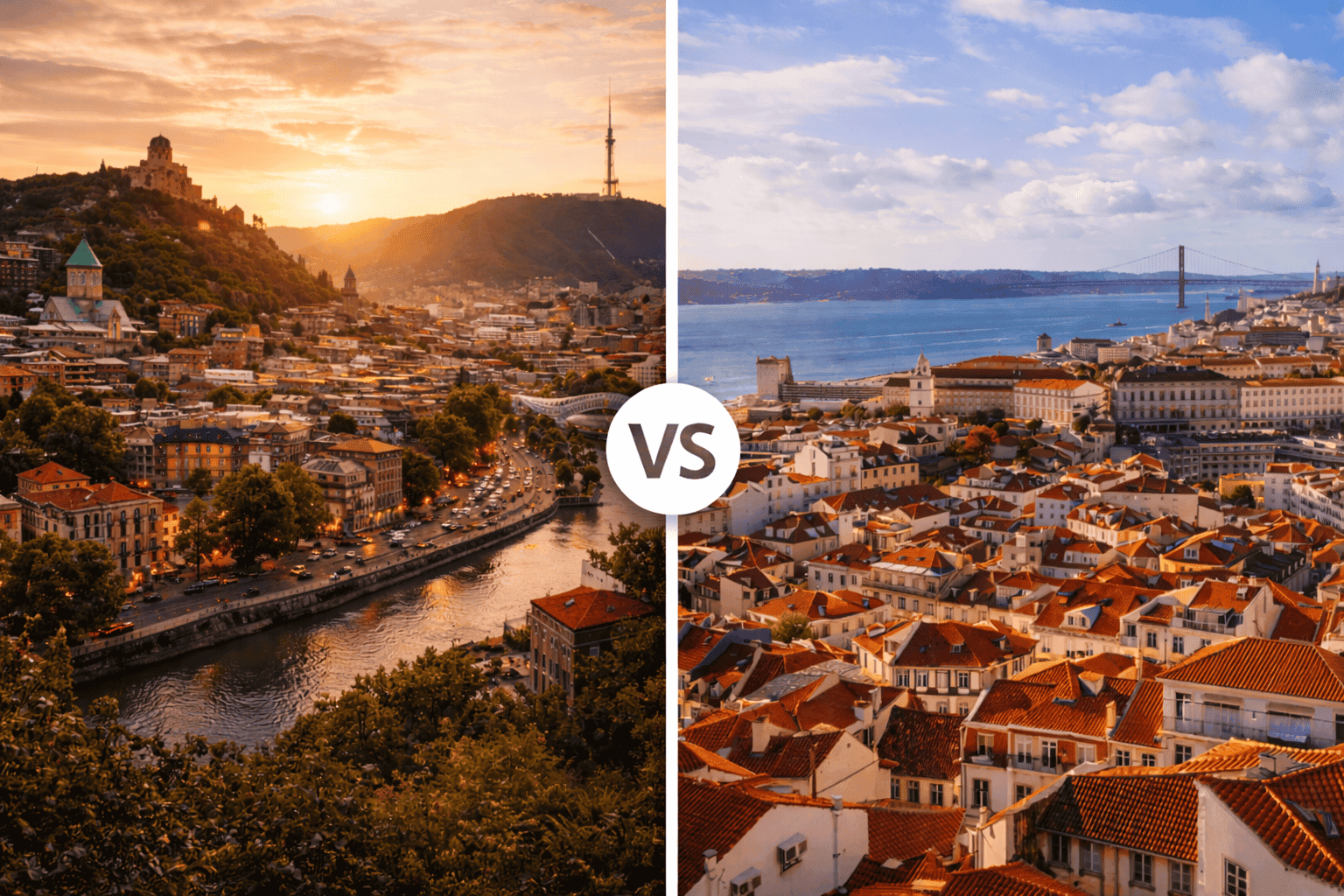
Portugal and Georgia are two frequent picks for digital nomads: one inside the EU with mild weather and a nomad visa, the other outside Schengen with low taxes and simple registration. Here’s a practical comparison of visas, prices, taxes, and daily life.
Visas and length of stay
Portugal offers D7 (passive/remote-friendly income) and the Digital Nomad Visa - usually one year renewable. You need income proof, housing, insurance. Schengen access and EU mobility follow. Georgia gives many nationalities visa-free entry or a stamp (often 90 days or a year depending on passport). Long stays use residence or entrepreneur status. Portugal offers a clearer path to EU residence and citizenship; Georgia is faster to enter with less upfront bureaucracy.
Cost of living
Portugal costs more: Lisbon and Porto one-bedrooms often €800-1,500+; food and cafés are Western European. Smaller cities (Braga, Coimbra, Algarve inland) are cheaper but prices rose with tourism. Georgia is noticeably cheaper: Tbilisi one-bedrooms often $400-700. Batumi runs higher seasonally. For tight budgets Georgia wins; for EU infrastructure and services, Portugal.
Taxes for freelancers
In Portugal, resident income tax and social contributions can be substantial; former NHR-style regimes helped some newcomers - verify current law. In Georgia, small-business and sole-trader regimes can be very light if you meet conditions. Georgia often wins on net tax; Portugal if EU status and long-term integration matter more.
Remote work conditions
Both have good internet and cafés in big cities. Portugal has strong nomad communities in Lisbon and Porto, more English in daily life, more international events. Georgia has a growing Tbilisi scene, cheaper coworking and rent, less English outside expat bubbles. Banking: euro accounts for EU residents are straightforward in Portugal; Georgia uses TBC, BoG - non-resident onboarding varies.
Climate and lifestyle
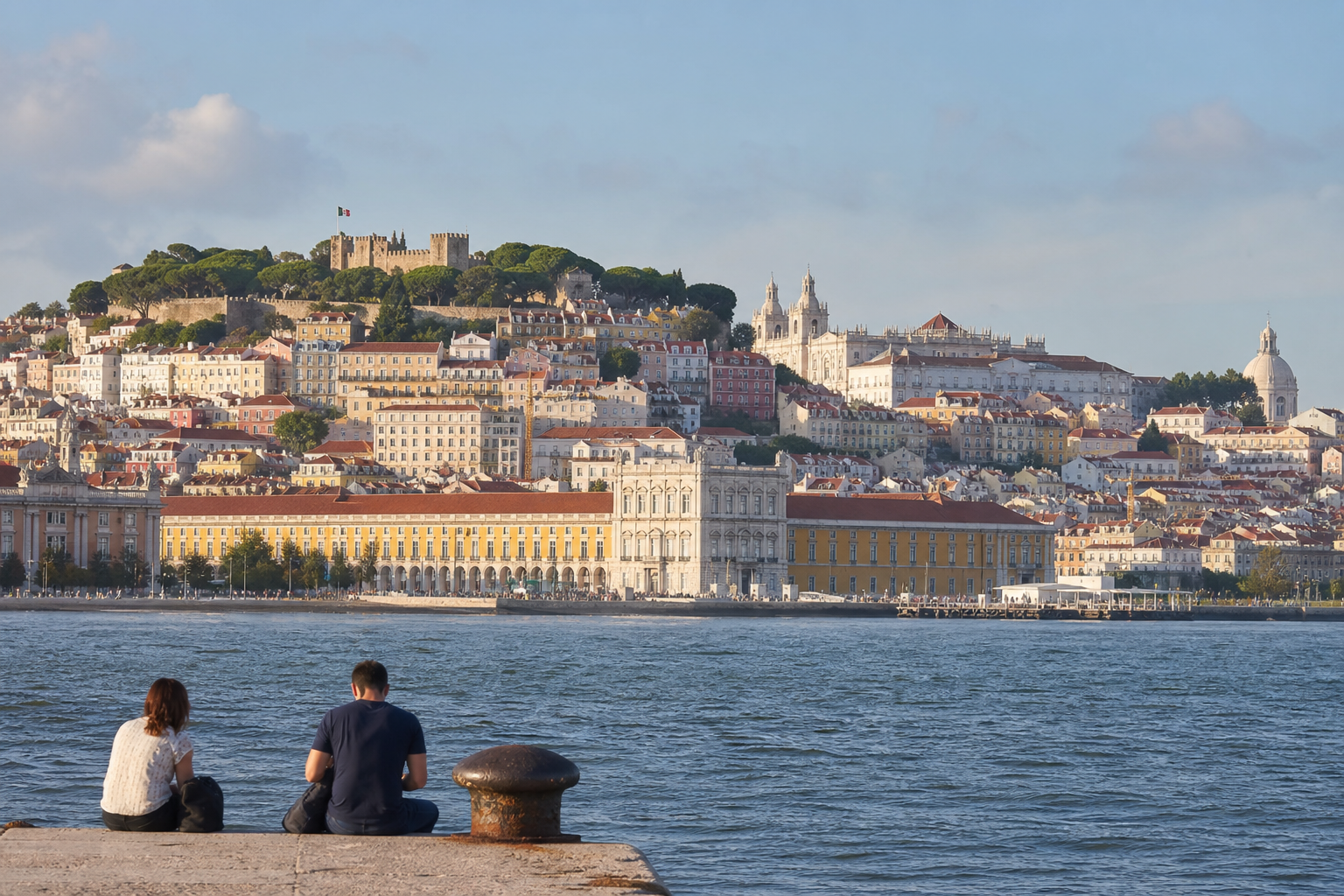
Portugal: ocean, mild winters, hot south; café culture and wine. Georgia: continental Tbilisi (hot summers, cold winters), sea in Batumi, mountains nearby. Both are relatively safe regionally; in Georgia neighbourhood context still matters. Taste decides: EU coast vs Caucasus, wine, and lower spend.
Who fits where
Choose Portugal for EU life, long-term residence, strong infrastructure, and community - if you accept higher housing and tax. Choose Georgia for lower cost of living, quick entry, and moderate taxes on foreign clients. Many try Georgia first, then consider Portugal for the EU; others stay in Georgia for years. A month in each helps if you can.