
Spain’s digital nomad route lets remote employees and freelancers live and work legally for extended periods. Barcelona remains one of Europe’s top nomad cities. Below: visa basics, taxes, and what to expect in the Catalan capital.
Digital Nomad Visa (DNV)
Spain’s digital nomad visa allows living in Spain while working remotely for employers or clients outside Spain - typically at least ~80% of activity must be foreign-sourced. You apply at a Spanish consulate; after approval you enter and obtain your TIE residence card in Spain. Initial authorisation is often one year, extendable.
Requirements and documents
Typically: passport; proof of remote work (employment contract abroad or client contracts outside Spain); criminal record check; private health insurance valid in Spain; income proof (often around 200% of IPREM - roughly €2,000-2,500/month as a guide, verify current figures). Consulates publish exact lists; processing can take weeks or months.
Taxes in Spain
If you spend more than 183 days/year in Spain you are usually tax-resident and must declare worldwide income. DNV holders may access a special regime (fixed rate on employment/self-employment income up to a cap - often cited around 24% vs progressive IRPF) - confirm with a tax adviser. VAT rules for foreign clients differ by case. Professional advice is important.
Life in Barcelona
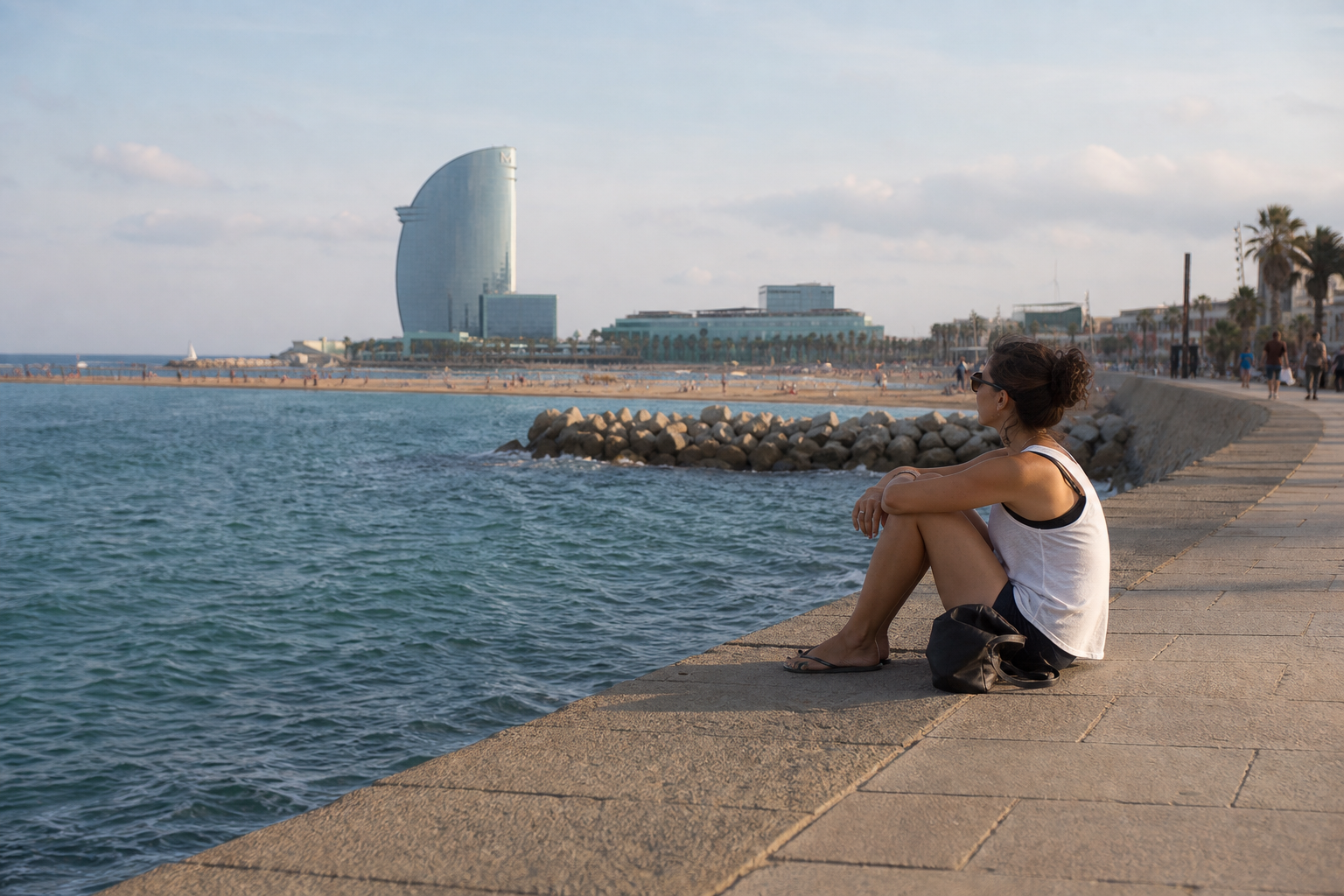
Barcelona offers strong internet, many coworkings and cafés, and a large expat scene. Climate is mild, the sea is close, culture and events are rich. Downsides: high rent, tourist crowds, noise and petty theft in central areas. Alternatives: Valencia, Madrid, Málaga, Granada - each with different pace and prices.

Cost of living
One-bedroom rent in Barcelona often €800-1,200+/month; rooms €500-700+. Food and transport cost more than Latin America or much of Asia but less than Northern Europe. Comfortable solo budget often €1,500-2,500/month. With a TIE, local bank accounts are usually possible; Wise and Revolut remain useful.
Relocation tips
Start documents early: apostilles, translations, and appointments take time. Choose insurance that meets consulate wording. Housing via agencies, Facebook groups, or rental platforms; first contracts often 6-12 months. Basic Spanish helps; Catalan appears in some admin. For long-term life, learning Spanish (and some Catalan) pays off.


