
Thailand remains a top hub for digital nomads: affordable living, warm weather, infrastructure, and visa paths for longer stays. In 2025-2026 tourist visas and the Destination Thailand Visa (DTV) are in focus. Below: what to pick and how to settle in Bangkok or the islands.
Visas: tourist and DTV
Many nationalities get visa-free entry (often 30 days by air - rules vary by passport). Tourist visas from consulates can give 60 days with possible 30-day extension in Thailand. Multi-entry tourist (METV) allows repeated entries within six months. The Destination Thailand (DTV) targets remote workers and freelancers with longer stays - income proof, insurance, and other documents apply; check official sources and your consulate for current packages and durations.
Cost of living
Bangkok and popular islands (Phuket, Samui, Pai) differ in price. Bangkok studio rent often $300-600/month; islands can cost more. Rooms in condos $200-400. Street food $2-5/meal; restaurants $5-15. Transport (BTS, MRT, taxis, bikes) is cheap. Comfortable solo budget often $800-1,500/month; islands $1,000-2,000+ depending on lifestyle.
Bangkok and the islands
Bangkok - main hub: fast internet, coworkings, large expat scene. Sukhumvit, Thong Lor, Ekkamai are practical bases. Chiang Mai - cooler, calmer; many coworkings. Phuket, Koh Samui, Pai - beach or mountains; weaker infrastructure than Bangkok but growing. Choose city vs nature based on your pace.
Coworkings and internet
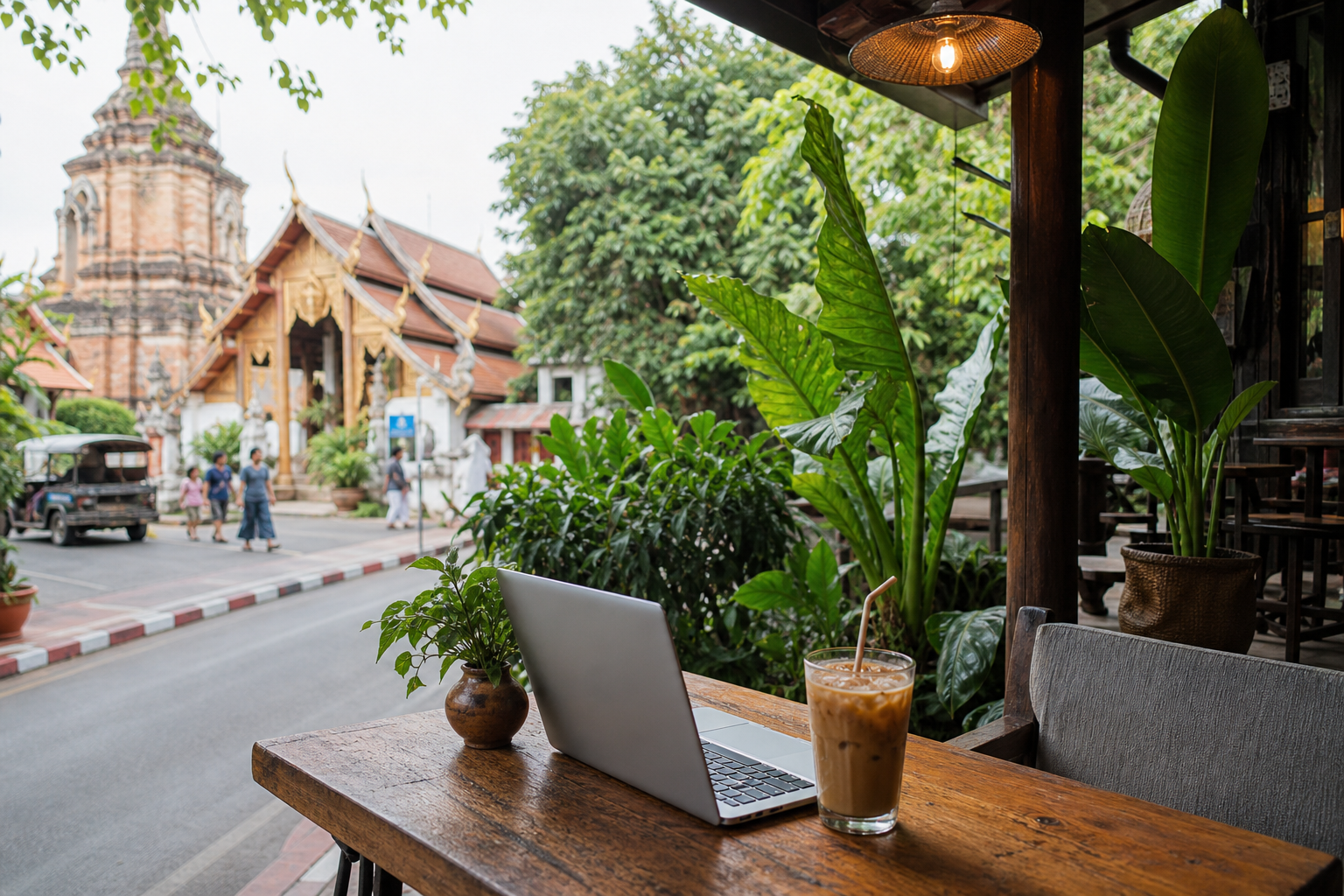
Bangkok and Chiang Mai have many coworkings: roughly $5-15/day. Examples: HUBBA, The Hive, WeWork (Bangkok), Punspace (Chiang Mai). Home fibre is fast and cheap; mobile 4G/5G from AIS, True, DTAC. On islands check neighbourhood reviews - quality varies.

Money and banks
Opening a Thai bank account without a long-stay visa is hard; nomads often use Wise, Revolut, and cash (baht). Cards work in malls and chains; small shops and markets want cash. ATMs may charge ~220 THB per withdrawal on top of your bank’s fees.
Practical tips
Visa rules change - watch DTV and tourist updates. Insurance meeting Thai requirements matters for longer stays. Rainy season (~May-October) affects island choice. Long-term rent is often cheaper than monthly tourist pricing. Working for a Thai employer on a tourist visa is illegal; remote work for foreign clients exists in a grey zone - get legal advice for your situation.


