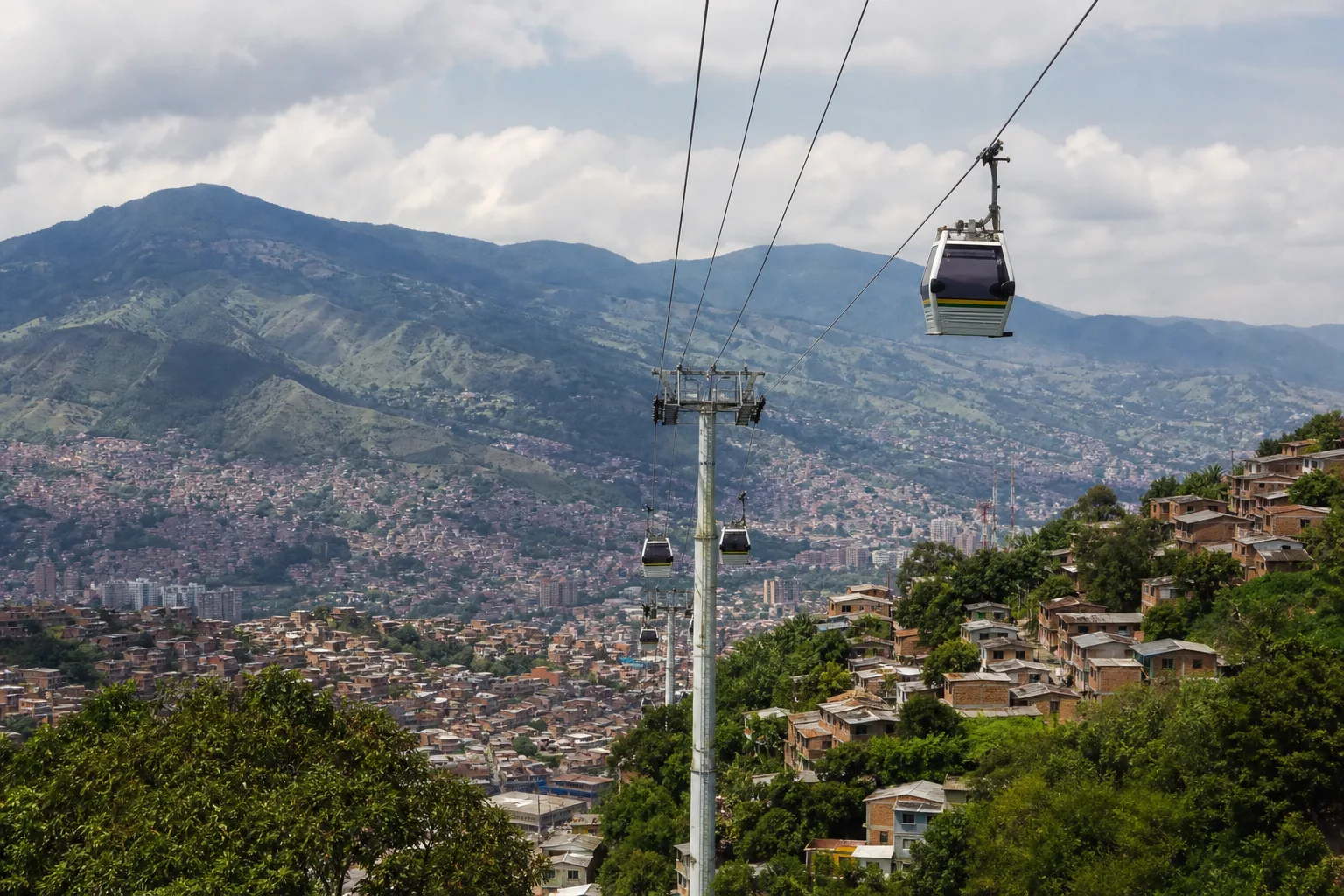
Without remote income or a work / nomad visa, going to “find a job on the ground” is almost always a bad idea. The local market is tough even for Colombians: wages near minimum to average, high competition, and you cannot work legally without a permiso de trabajo. Side gigs on a tourist stamp risk your status. The normal path: remote income in foreign currency or a visa for work/nomad — see Visa and documents.
Documents and legalization
Before relocating to Latin America, gather all your documents and get an apostille on everything that requires it.
You will also need a criminal background check — many visas now ask for an apostilled certificate or proof that you have no convictions.
Strongly consider giving someone back home a power of attorney so they can handle paperwork for you remotely.
A second passport can be issued at the Russian consulate in Bogotá (about three months). Payment at the consulate is cash pesos only.
Processing in Colombia
A certificate (without apostille) can be issued in about ten days in Spanish, Russian, or English. Book via the consulate site: bogota.kdmid.ru. You will need your Russian internal passport and foreign passport. Cash Colombian pesos only.
Cases where apostilled documents are required:
- Digital nomad visas increasingly ask for a birth-country criminal record with apostille (they did not always, but they do now).
- Some countries ask for an apostilled birth certificate when you start legalization — for example before marriage or other official steps.
- Employers sometimes need a confirmed document with apostille if you apply for a work visa.
- Apostilled marriage certificate (required if you want to legalize your status through marriage).
Buying tickets and flights
In September 2024 a passenger was denied boarding in Europe (Madrid, Spain) because they had no return ticket. Take the return-ticket requirement seriously.
We strongly do not recommend Wingo — roughly one in three people report ticket purchase or cancellation problems.
We also strongly do not recommend Turkish Airlines, per advice from the Russian consulate and travel communities. The Moscow Times: Russia Urges Citizens to Avoid Flying Turkish Airlines to Latin America.
Please do not use EuroAvia and similar ticket aggregators for flight search. Look for tickets only on real airline websites. Recently someone in the community reported that EuroAvia created fake return tickets that the airline could not find in its system. Please be careful.
If Turkish Airlines denies boarding
Main airline rules Turkish cites: Passenger Admission Rules for Countries in South America.
Support groups: Telegram — Turkish airlines scam company, Telegram — Denied boarding to Argentina and beyond.
1. Collect evidence
- Tickets: electronic or paper copies.
- Passport and visas: scans of everything that shows you were ready to fly.
- Airline correspondence: emails or messages, especially about the flight, refusals, or changes.
- Witnesses: other passengers or airport staff who saw what happened.
- Photo or video: what happened at the airport (interaction with airline staff).
2. Contact Turkish Airlines support
Call the Turkish Airlines hotline or send an official complaint through their website. Describe the situation in as much detail as possible — flight number, date, and attach all evidence. Ask for an explanation of why boarding was denied and for compensation (ticket cost, extra expenses, accommodation, etc.).
3. Aviation regulators
EU Regulation 261/2004: if the flight was to or from the EU, you can file a complaint under this regulation — it protects passengers in cases of cancellation, denied boarding, and significant delays.
Your country’s civil aviation authority: contact the aviation regulator in the country of departure or arrival; depending on jurisdiction, it may help compel the airline to respond.
4. Legal advice
Hire a lawyer who specializes in aviation law or consumer protection. They can assess your chances in court and represent you. Choose the jurisdiction for filing a claim (for example, the country of departure or where the airline is registered). A lawyer helps formulate claims, strategy, and demands to the airline (damages, moral harm, etc.).
5. If it goes to court
You can claim damages (from the taxi to the airport to accommodation in Turkey while the case is resolved) and moral damages — if denial was passport-related, discrimination claims may have a chance. Embassies also recommend going to court without delay: TASS — embassy recommendations.
Before departure
Complete Check-Mig before arrival. It speeds up immigration (sometimes they skip it, but better safe). Free, optional, useful — official Migración Colombia video: Migración Colombia — 3 cosas que debes saber de Check-Mig.
Ticket purchase and prep
Some services hold a booking in airline reservation systems without paying for the full ticket (prices from about $5 to $100).
Search and buy tickets on the site’s Flights section (Aviasales) or directly with airlines.
Before buying a ticket on a route to Colombia, read all connection conditions carefully — this is very important, because you may need a transit visa.
Carry both outbound and return tickets with you (this requirement comes from airlines, not just immigration).
When crossing any country you should have a real return ticket with a PNR, not a fake one. (PNR — Passenger Name Record, the booking code airlines and GDS use for flight, seat, contacts, etc.)
Sometimes you can pay for a temporary hold in a booking service (often 7–14 days) instead of buying a full ticket. This helps with visa applications and sometimes at border or transit checks. Example services (choose and verify yourself): dummyflights.com, Onward Ticket, Dummy Ticket 247, SFRV Travels, VisaReservation, EuroAvia (how-to guide).
All fake flights (drawn-up or hold-only bookings) are your responsibility. If you do not mind spending money for peace of mind, buy a refundable return ticket. If you risk being denied boarding — that risk is entirely yours.
Useful links: aggregator Aviasales; airlines Avianca, Copa, American Airlines; hotels Booking, Ostrovok; delay/cancellation compensation — AirHelp; luggage storage — Radical Storage.
Under IATA rules you can buy a ticket to a third country, but Turkish Airlines has its own rule: “return ticket on the same route in one RT booking.” If you buy a return with Turkish Airlines — pay close attention to fares and conditions. This airline has the strictest cancellation, change, and refund rules (we strongly recommend reading all fare rules and return-ticket conditions before you pay).
Where is a transit visa required?
Read carefully: how many connections, which cities, airport and airline rules (some Middle Eastern carriers require re-check-in in the US where you must leave the aircraft).
Transit in the UK, Spain, France, Germany, Netherlands (Amsterdam).
Transit in the USA (if the airline does not require re-check-in and it is a technical stop, you may not need a C visa).
Transit in Canada.
People from CIS countries and many Eastern passports with limited visa-free access should also check their passport in the Passport Index ranking: where visa-free entry applies, where you need an e-visa, and where you need a visa on arrival.
Flight options
Before choosing a route, study transit rules and visa requirements.
- Sheremetyevo (SVO) with a connection in Varadero (VRA), taxi to Havana, then Bogotá two days later — sometimes there are no flights on this leg.
- Moscow — Caracas (Venezuela) — Colombia.
- Moscow — Cuba — Colombia.
- Flight from Turkey (Istanbul) — high risk of denied boarding. Turkish Airlines new rules, main rules on the airline site. Many report tightening rules (for example, no baggage allowed, or a mandatory return ticket). Section: if denied boarding.
- Emirates (EK) via Dubai (DXB) — no reported problems.
- Qatar Airways (QR) via Doha (DOH) — no reported problems.
- British Airways (BA) and Avianca (AV) via London (LHR) and Bogotá (BOG) — no reported problems.
- Air France (AF) and Avianca (AV) via Paris (CDG) and Bogotá (BOG) — no reported problems.
- Lufthansa (LH) and Avianca (AV) via Frankfurt (FRA) and Bogotá (BOG) — no reported problems.
- KLM (KL) and Avianca (AV) via Amsterdam (AMS) and Bogotá (BOG) — no reported problems.
- Aeroflot via Miami (MIA) — no reported problems.
Money (withdrawals and exchange)
- Bringing cash in — maximum $10,000 without declaration. Above that amount you must declare (how to declare cash — check the airport help desk or online instructions; usually a separate queue and a declaration form).
- Airport counters exchange cash to pesos at a rate almost the same as in the city.
- Currency exchange booths are in every shopping mall, usually 2–3 shops. Banks are more expensive: they charge tax and a withdrawal fee (if you hold dollars in a bank account and withdraw them).
- Cash withdrawal: green Servibanca ATMs are the most convenient for foreign cards (limit up to ~2,000,000 COP). The on-screen fee is usually 22,000–28,000 COP plus your bank’s fee. More detail in the Finance section.
- USDT exchange in Colombia — exchangers exist. You can also use P2P platforms or contacts from community exchange chats in the guide profile.
Housing and neighborhoods
Book a hotel or Airbnb before arrival. At the immigration desk they will ask for your address of stay.
Research neighborhoods, parks, safe areas, and local culture before you choose where to live:
Connectivity before arrival (eSIM)
Before flying, get an international SIM/eSIM so you have data at the airport and on the way to the city — no queue at a local carrier desk.
We recommend Drimsimone card works in many countries, good for travel and the first weeks of relocation. Buy a local Colombian SIM (Claro, Tigo, etc.) in country — seeMobile.
Outlets and electronics
Colombia uses different outlets: voltage 110 V, 60 Hz, standard US-style two-pin plugs. Look into this before you leave and buy adapters so you are not hunting for them after arrival.
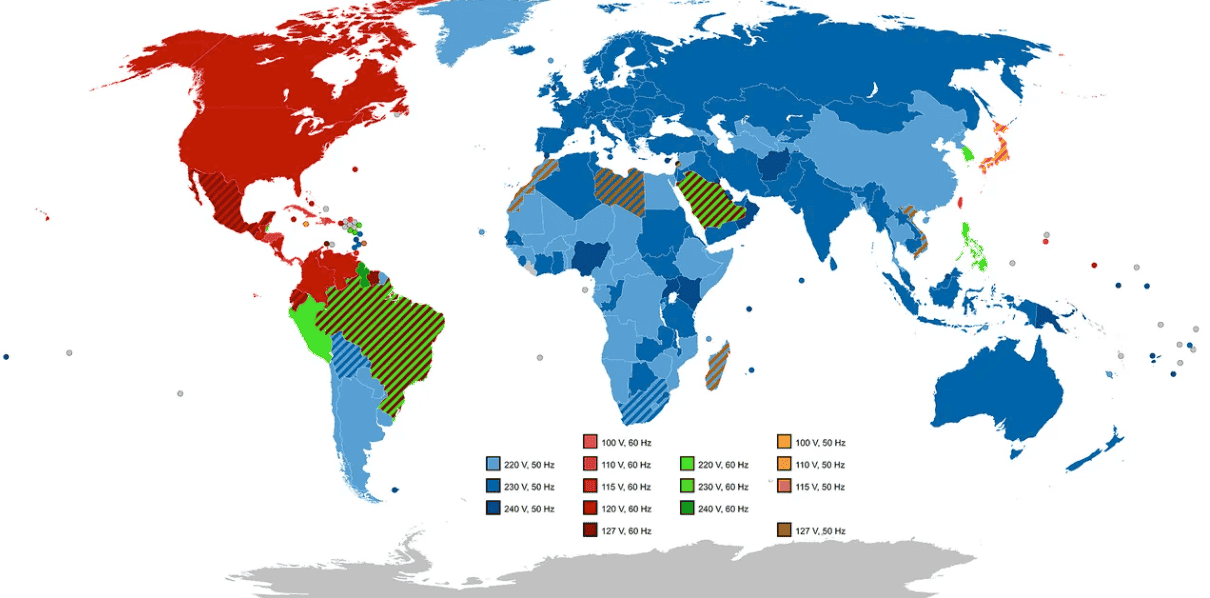
Useful links: ElectricPlug — Colombia, TravelAsk — what outlets are used in Colombia.
Working in Colombia
Average monthly salary in Colombia is about 2–2.5 million Colombian pesos (COP), roughly $500–650 depending on the exchange rate. Minimum wage in 2024 was about 1,160,000 COP (around $300).
Salaries depend on profession, region, and qualifications. In major cities (Bogotá, Medellín, Cartagena) pay is usually higher, especially in IT, finance, and management.
Popular job sites in Colombia:
- Computrabajoone of the largest job boards across industries, with employer reviews and job-search tips.
- Elempleopopular local site aimed at domestic and international companies.
- Indeedinternational platform with vacancies across Colombia and filters by experience and salary.
- LinkedInjob search and professional networking, including direct company offers.
- Opcionempleoaggregator pulling listings from multiple sites and employers.
- Glassdoorjobs, company reviews, and salary information.
- Jooblejob aggregator for Colombia.
Medications
Colombia strictly controls the import of certain medications. It is prohibited to bring in narcotic substances: cocaine, heroin, marijuana, ecstasy, LSD, amphetamines, and opioids (for example, morphine, codeine, oxycodone). Strong psychotropic drugs are also banned, including benzodiazepines and some sleep medications such as zolpidem (Ambien).
There are also restrictions on prescription medicines. Some antibiotics, antidepressants, and antipsychotics may be imported only with a doctor’s prescription. It is recommended to carry a prescription in Spanish or an international medical certificate confirming that you need the medication.
Sleep and anxiety medications
- Barbiturates
- Benzodiazepines
- Zolpidem (Ambien)
- Zopiclone (Imovane)
Other prohibited drugs
- GHB (gamma-hydroxybutyrate)
- Ketamine
- Phencyclidine (PCP)
- Rohypnol
Restricted medications
- Antibiotics — prescription required.
- Antidepressants (e.g. fluoxetine, sertraline).
- Antipsychotics (haloperidol, risperidone).
Prohibited medications
- Narcotics and psychotropics
- Cocaine
- Heroin
- Marijuana
- Ecstasy
- LSD
- Amphetamines
- Methamphetamines
- Fentanyl
- Methadone
- Morphine
- Codeine
- Oxycodone
- Hydrocodone