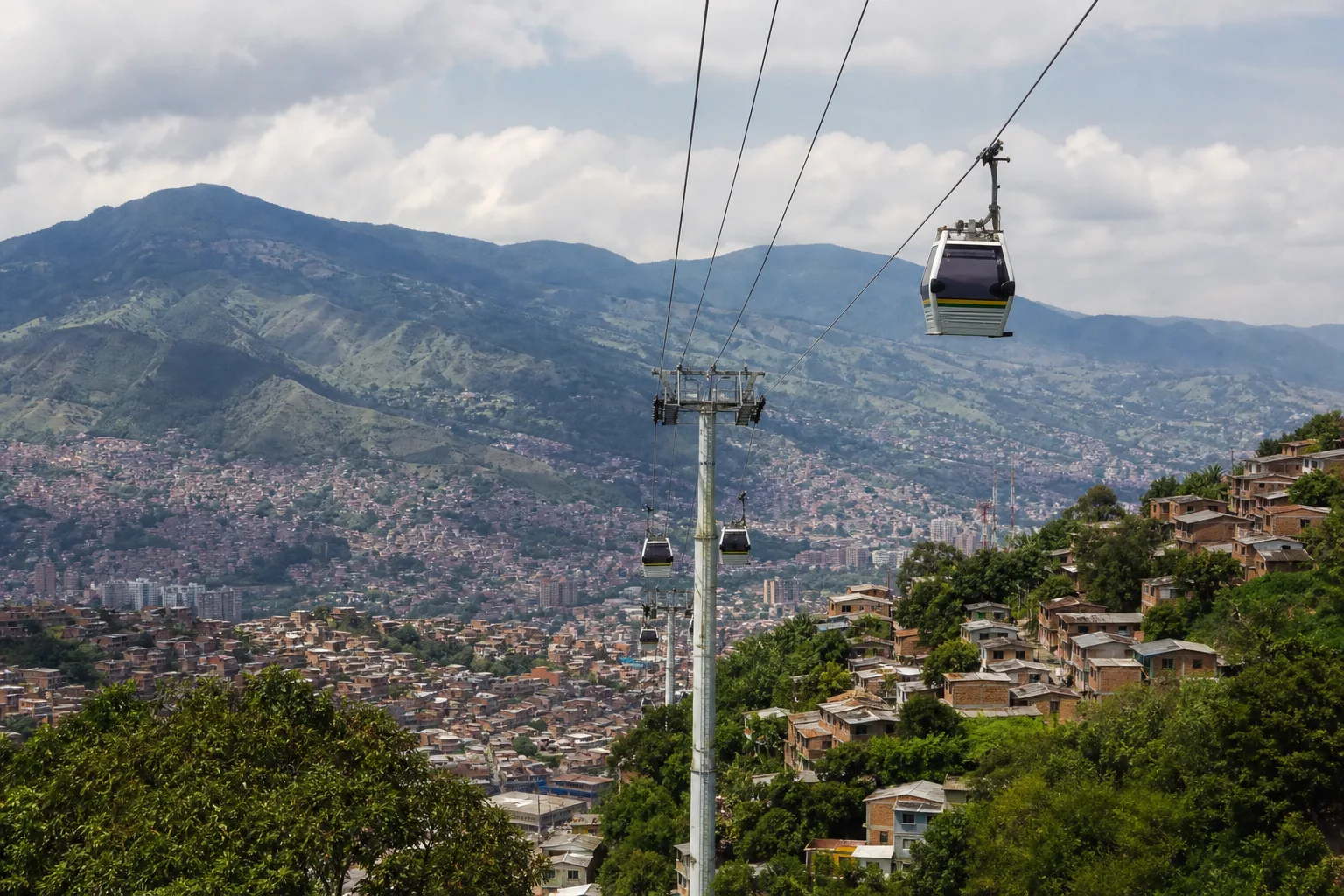
In Poblado and a coworking space you can live on English for a long time. On the street, at the bank, at Migración, and with your landlord - a different world: real Colombian Spanish with pues, listo, and a soft smile even when they say no.
Below is not a school textbook but a pocket guide: how the language sounds by region, phrases that save you in the first month, and words that show you are “in the know”. Schools and resources are at the end.
How Colombia sounds
Colombian Spanish is often praised for clarity - especially in Bogotá and Medellín. But it is not “neutral textbook”: each region has its own character.
Paisa (Medellín, Antioquia)
Warm, sing-song, lots of pues and ¿sí o qué?. «Parce» / «parcero» - friend, buddy. Here you pick up street rhythm fastest.
Rolo (Bogotá)
Clearer, slightly drier, closer to “book” Spanish. In the capital news and officials are easier to understand - a good start if you learn from zero.
Costeño (Caribbean: Cartagena, Barranquilla)
Faster, softer consonants, hotter intonation. First days it can feel like everyone talks through music - normal, your ear will catch up.
Literary bonus: Gabriel García Márquez wrote in Caribbean Spanish - if you read Cien años de soledad or listen to the audiobook, you learn language and country at once. No need for a pencil: reading short paragraphs aloud is enough.
First phrases you actually need
Do not memorize textbook lists. Learn scenes - the ones you hit in week one.
Greetings and politeness
Buenos días / Buenas tardes / Buenas noches
Good morning / afternoon / evening. In Colombia this is not formality - without a greeting in a shop or taxi it feels cold right away.
¿Qué más? / ¿Quiubo?
Informal “what’s up?” / “so?”. Answer is often: Todo bien, ¿y usted?
Por favor / Gracias / Con mucho gusto
“Please” / “thank you” / “you’re welcome” (very Colombian reply to gracias).
Disculpe / Perdón
“Excuse me” (get attention) / “sorry” (if you bumped someone).
¿Me puede ayudar, por favor?
“Can you help me?” - universal for street and office.
Taxi, Uber, DiDi
¿Me lleva a…? / Voy para…
“Take me to…” / “I’m going to…”
¿Cuánto cuesta? / ¿Cuánto me cobra?
“How much?” / “What do I owe you?”
¿Puede bajar un poco el aire / la música?
“Can you turn down the AC / music a bit?”
Aquí está bien, gracias
“You can stop here, thanks.”
¿Acepta tarjeta? / Solo efectivo
“Card OK?” / “Cash only.”
Café, market, food
¿Me regala un tinto, por favor?
“Can I get a black coffee?” - tinto here is not wine but a small black coffee. ¿Me regala…? - polite request (“gift me”, meaning “please give me”).
La cuenta, por favor
“The bill, please.”
¿Está picante? / Sin cebolla, por favor
“Is it spicy?” / “No onion, please.”
Para llevar / Para comer aquí
“To go” / “For here.”
Está delicioso / Quedó rico
“Very tasty” - compliment to cook or host always works.
Food and dish names: Food.
Housing and daily life
Estoy buscando arriendo / ¿Tiene disponible?
“I’m looking for a rental” / “Available?”
¿Incluye servicios? (agua, luz, internet)
“Utilities included?” (water, power, internet).
Se dañó el… / No funciona el wifi
“The … broke” / “Wi‑Fi doesn’t work.”
¿A qué hora llegan?
“What time will you arrive?” - for courier, repair, landlord.
Neighborhoods and rent: Housing.
Bank, Migración, documents
Necesito sacar una cita / Tengo una cita
“I need an appointment” / “I have an appointment.”
Soy extranjero / Este es mi pasaporte
“I’m a foreigner” / “Here is my passport.”
No entiendo / ¿Puede hablar más despacio, por favor?
“I don’t understand” / “Can you speak more slowly, please?”
¿Me puede explicar otra vez?
“Can you explain again?” - calmly, without embarrassment.
¿Dónde firmo? / ¿Falta algún documento?
“Where do I sign?” / “What’s missing?”
Colombianisms that mark you as a tourist without them
These words are not in every textbook but you hear them daily. Learn ten - conversations get warmer.
Chévere / Bacano
Cool, great, awesome.
Listo
“Done” / “OK” / “deal”. The most common word after “hola”.
Parce / Parcero(a)
Friend, buddy (Medellín and beyond). Informal.
Pues
Filler particle: softens a phrase. Sí, pues - “well yes”.
¿Sí o qué?
“Right?” - friendly confirmation.
De una / De una vez
“Right away” / “let’s do it now” / “agreed”.
¿Qué pena!
Not “what a pity” in the English sense but “sorry / awkward” - when you are late or bothered someone.
Regalar
In requests: ¿Me regala…? = “please give me” (not necessarily a gift).
Rumbear
Go out, party.
Tinto
Black coffee (small cup). Wine is vino tinto if you need to specify.
Agüita / Suavecito
Diminutives everywhere: little water, “go easy”. Sounds friendly and local.
¡Qué oso!
“How embarrassing / awkward” (colloquial).
Addresses the Colombian way
Maps here use a grid: Calle (street, often crosswise) and Carrera / Cra (avenue, often lengthwise). An address reads like this:
Calle 10 #43-20 - Calle 10, building at intersection with Carrera 43, inner number 20.
Carrera 43A #1-50 - Carrera 43A, at Calle 1, number 50.
Useful for a taxi: «Calle diez con carrera cuarenta y tres» - “tenth with forty-third”. A letter in the number (43A) is read “cuarenta y tres A”.
¿Cómo llego a…?
“How do I get to…?”
Queda cerca / Queda lejos
“It’s close” / “It’s far.”
A la derecha / A la izquierda / Todo derecho
Right / left / straight.
Al lado de / En frente de / Detrás de
Next to / across from / behind.
Email is dictated letter by letter: arroba = @, punto = dot, guion bajo = _. Short guide: how to dictate an email in Spanish.
How to learn so you actually speak
Flashcards help, but language “clicks” from live contact. A workable first-month plan:
- One scene per day. Today - café only. Tomorrow - taxi only. Say it aloud until automatic.
- Intercambio. Language exchange in a café or via Meetup: 30 min your language / 30 min Spanish. Look in Community and MDE Community.
- Listen to locals. Radio, podcasts, series without dubbing. Even café background trains your ear for paisa.
- Read short text. Signs, menus, WhatsApp from your landlord - that is your textbook. Márquez and poetry when you want beauty, not homework.
Word memorization (if you like systems): how to learn vocabulary effectively. Flashcards optional: Quizlet.
Schools
In person and online. They issue language certificates - handy for visa, study, or résumé.
School in Colombia. Mention you were referred by Alexander Yang / Aleksandr Iang - sometimes a discount. Bookings: LCN Idiomas app.
Universities and study: Education.
Mini drills (optional)
If you want ten minutes of play - directions and basic vocabulary:
- Direccionesdirections on a map
- On the street(LingoHut)